Add Row
Add Element
cropper
update
Ultimate Home DIY
update
Add Element
  • Home
  • Categories
    • Home Hacks
    • Tool Tips
    • Green Living
    • Renovation
    • Fix It
    • Decor Dreams
    • Skill School
November 01.2025
3 Minutes Read

The Ultimate Guide to Removing Spider Sacs from Your Home's Exterior

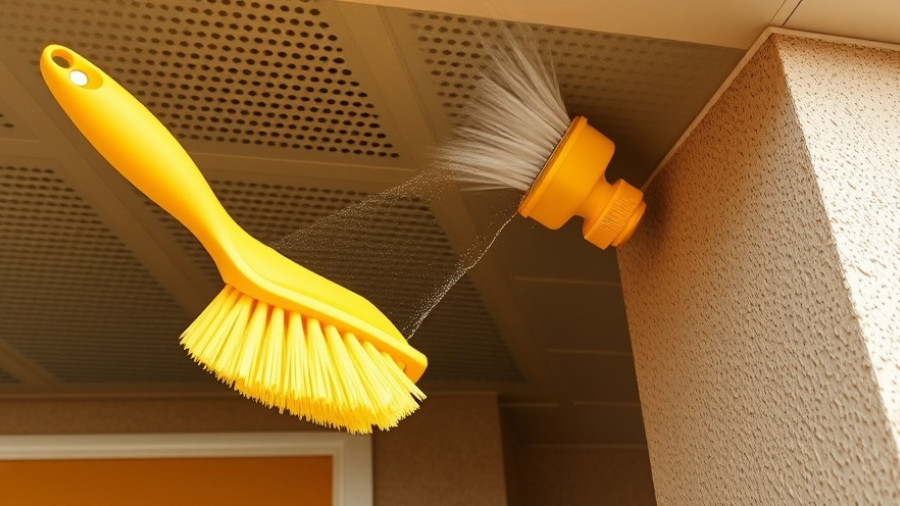
Removing spider sacs from home exterior with a brush tool.

Understanding the Threat: Why Spider Sacs Matter

For many homeowners, the mere sight of spider sacs can trigger a sense of dread. These small, silk-covered spheres, often found tucked into the corners of windows, soffits, and other secluded spaces, are not just unsightly. They can contain dozens, or even hundreds, of spider eggs, depending on the species. Thus, addressing spider sacs is not solely an aesthetic concern; it’s a vital step in preventing potential infestations within your home.

DIY Methods for Effective Removal

When it comes to effectively removing spider sacs from your home’s exterior, one method stands out for its simplicity and efficiency. A combination of the Ryobi 18V One+ Telescoping Power Scrubber with a Vortex Medium Bristle Brush can significantly ease the cleaning process. Importantly, ensure your brush is dry—wetting spider sacs can make them stickier and harder to remove.

For a successful clean, follow these steps: charge your Ryobi brush, attach the larger brush head, and adjust it to reach problematic areas. Glide the brush along your home's soffit to dislodge webs and sacs without strenuous manual labor. To ensure effectiveness, angle the brush as necessary, allowing it to reach inside crevices without the hassle of climbing ladders unnecessarily.

Vacuuming: A More Permanent Solution

If you prefer a more thorough approach, consider using a shop vacuum. This method allows for not just removal of the spider sacs but a cleaner, less messy job. Keeping the area dry is essential, as vacuuming works best when the sacs remain intact. Be sure to dispose of the vacuum bag outdoors immediately after use to prevent re-infestation.

Know Your Enemy: Identifying Spider Species

Understanding the type of spiders in your home can inform how you deal with their egg sacs. Common household spiders like the American House Spider and Hobo Spider pose minimal risk, while species like the Brown Recluse and Black Widow can be dangerous. Spider sacs vary in appearance—ranging from tan to white—depending on the spider. Identifying these can help you take appropriate action, whether it’s DIY removal or calling for professional pest control services.

Preventative Measures: Keeping Spiders at Bay

Once you’ve removed spider sacs, it’s important to take proactive steps to prevent their return. Regular cleaning can eliminate webs and spiders alike. Sealing gaps around windows and doors, reducing clutter, and keeping your home dry are crucial components in making your environment less inviting for these arachnids.

Moreover, manage your exterior—maintaining foliage away from the house can significantly reduce spider access. Indoor pest reduction is also vital; spiders are attracted by their food sources, such as insects. Thus, examining your home for pests is an integral part of spider control.

Time to Take Action

Now that you're equipped with the tools and knowledge to reclaim your home from spiders, why not take that first step? Remember, the fight against spider sac infestations may seem daunting, but with a few simple strategies, you can maintain a spider-free, inviting space for your family.

If you’re dealing with a more significant infestation or a dangerous spider species, don’t hesitate to reach out to a local pest control service – their expertise could save you a lot of additional trouble. Contact an expert today!

Tool Tips

18 Views

0 Comments

Write A Comment

*
*
Related Posts All Posts
01.21.2026

Discover How the Makita 40V Max XGT Motor Unit Revolutionizes DIY Projects

Update Transforming Power Tools: Makita's Innovative 40V Max XGT Motor Unit In 2026, one of the standout innovations presented at World of Concrete was the Makita 40V max XGT Motor Unit. While many brands are racing to create cordless tools to replace traditional gas models, Makita is taking a different approach—by replacing existing gas engines with advanced battery technology. This advancement signals a shift not only in power tools but also towards sustainability in home and commercial projects. What is the Makita 40V Max XGT Motor Unit? The Makita 40V max XGT Motor Unit is designed as a drop-in electric replacement for small gas engines, specifically targeting those in the 25cc to 50cc range. This allows homeowners and professionals alike to retain their existing tools while enhancing their capabilities with battery power. The setup features a universal mounting pattern, making it compatible with various tools such as trowels, water pumps, vibrators, and more. Why Choose Battery Power Over Gas? Many DIY enthusiasts and professionals seeking to reduce their carbon footprint will find this shift from gas to electric power appealing. Advances in battery technology have made it possible to design tools that not only match but, in some cases, outperform their gas-powered counterparts, all while producing no emissions and reducing noise levels. This is particularly important for homeowners who want quieter tools for neighborhood use or for residential renovations. Convenience Meets Performance: Benefits of the XGT Motor Unit For those already invested in Makita’s ecosystem, such as the 18V LXT and 40V max XGT platforms, the XGT Motor Unit presents an easy transition into electric tools. The added convenience of using the same battery across a range of tools simplifies maintenance and usage. Coupled with Makita’s reputation for reliability, this product offers both familiarity and enhanced utility. Future Trends: The Evolution of Battery-Powered Tools As sustainable living becomes more prevalent, innovations like the Makita 40V max XGT Motor Unit demonstrate a promising future for electrification in power tools. The industry is seeing a notable trend towards the electrification of formerly gas-operated equipment, which aligns with environmental goals and economic incentives for homeowners and contractors alike. Engaging with OEMs: A Smart Strategy Reflecting on the rollout strategy, it's important to note that Makita is not only focusing on end-users but is also partnering with manufacturers of construction tools that currently lack electrification options. By offering the XGT Motor Unit as a pre-installed component for OEMs, Makita is potentially unleashing a new wave of efficient, battery-operated tools into the market. Essential Considerations for Homeowners For homeowners contemplating the benefits of the Makita 40V max XGT Motor Unit, the compatibility with existing tools eliminates the daunting task of transitioning to a completely new equipment line. Moreover, engaging with readily available battery solutions makes it feasible for everyday projects and increases the ease of use when managing different tools for various tasks. Conclusion: Embracing a Powered Future The Makita 40V max XGT Motor Unit exemplifies a significant leap in powering tools conveniently while adhering to ecological standards. With its anticipated launch in summer 2026, it is expected to generate substantial interest among DIY enthusiasts looking for innovative ways to tackle their projects. As this technology evolves, it invites consumers to reconsider the tools they use, focusing on enhanced efficiency and sustainability. If you find the prospect of battery-powered tools intriguing and want to explore further into how they can enhance your DIY projects, stay updated on the innovations from Makita and consider how transitioning to battery power can simplify your home improvement efforts.

01.20.2026

What Was the Most Popular Tool in the Year You Were Born? Find Out!

Update Discover Your Tool History: The Most Popular Tool Since Your Birth Year Have you ever wondered what the most popular tool was in the year you were born? As homeowners and DIY enthusiasts, we often take for granted the incredible evolution of tools available to us today. From power drills to smart saws, tools have significantly transformed over the decades, making them more effective and easy to use. Let’s take a fun journey through the decades, highlighting some of the most significant tools and their impacts on home improvement and construction. The Glory of the 1960s: The Birth of Cordless Innovation The 1960s marked a pivotal time for the tool industry. Black & Decker introduced the world’s first cordless drill in 1961, revolutionizing the way we approach DIY projects. Thanks to this innovation, homeowners could now tackle tasks without being tethered to a power outlet, allowing for greater ease of movement and flexibility. Plus, this advancement paved the way for future cordless tools, making home improvement projects more accessible and efficient. 1970s to 1980s: The Era of Precision and Safety The journey of tool history didn’t stop there. The 1970s and 1980s led to further innovations, such as the introduction of the Stanley PowerLock tape measure in 1963, which became critical in ensuring precise measurements—an essential for any renovation project. In 1980, the ratchet/socket wrench emerged, simplifying tasks that previously required considerable time and effort. This tool is still widely used today, showcasing the enduring nature of its design. New Millennia Innovations: Smart Tools for a Smart Home As technology progressed into the 2000s, tools became smarter. With the rise of battery-powered tools, innovations such as lithium-ion batteries became dominant in powering household devices, leading to improvements in battery life and performance. The introduction of intuitive designs and user-friendliness ensured that these tools catered not only to seasoned pros but also to beginners. Future Trends in Tools: Sustainability and Smart Technology Looking forward, the future of tools lies in sustainability and smart technology. As people are more environmentally conscious, companies are focusing on developing tools with less carbon footprint and higher energy efficiency. Innovations like self-healing batteries for tools not only aim to reduce environmental impact but also promise longevity in performance. Why Your Tool's History Matters Understanding the evolution of tools fosters a greater appreciation for your home projects. The tools you use are not just implements; they are the result of decades of innovation, trial, and error. Each tool carries a piece of history that has shaped what is possible in home renovations and DIY culture today. Knowing what was popular during your birth year can connect you more deeply to your tools. Conclusion: Dive into Your Birth Year Tool History So, what was the most popular tool in the year you were born? Whether it’s a well-designed power drill or a classic tape measure, each tool has its role in shaping modern home improvement. We encourage homeowners and DIY enthusiasts alike to reflect upon their own journeys with tools, celebrating both the innovations of the past and the exciting possibilities of the future. If you are eager to continue your journey in DIY projects, why not explore the tools from the list that correspond to your birth year? Find out what makes them special and how they can inspire your next home improvement adventure!

01.19.2026

How Self-Healing Batteries Will Transform Your Tools and EVs

Update Revolutionizing Battery Technology: The Future of Self-Healing Imagine never having to replace the batteries of your power tools or electric vehicle (EV) again. The concept of self-healing batteries, often regarded as science fiction, is inching closer to reality as researchers focus on technology that can withstand the rigors of daily use. By tackling the underlying issues that cause battery degradation, these innovations could signal a new era for both DIY enthusiasts and environmentally conscious consumers. Understanding Battery Failures: Why Do Tools and EVs Struggle? Typically, power tool batteries and EVs don’t just fail overnight. The degradation is a gradual process resulting from constant use. As batteries experience repeated charge cycles, their internal components face mechanical stress—electrodes crack, connections falter, and performance dips. For homeowners investing their time and money in DIY projects or renovations, understanding these failure modes is essential. The shift to self-healing technologies could mean a reliable battery performance that lasts longer under the most demanding conditions. A Closer Look at Self-Healing Systems The beauty of self-healing batteries lies in their potential to mend themselves. Current research, including a collaborative project in the EU named PHOENIX, aims to create batteries equipped with advanced sensors that can detect damage and trigger repair mechanisms autonomously. This technology seeks to enhance durability, safety, and eco-friendliness—an essential aspect for those looking to minimize their carbon footprint. Innovative Components: From Electrodes to Electrolytes One promising avenue involves self-healing electrodes that could maintain connectivity, even when internal damage occurs. Researchers are exploring flexible materials capable of reconnecting when cracked, addressing one of the most significant challenges within lithium-ion technology. For homeowners engaged in heavy-duty tasks, this means tools can deliver consistent power without the constant worry of battery failure. Solid-State Batteries: A Game-Changer for the Industry In addition to self-healing attributes, solid-state batteries represent a major leap forward. Unlike conventional batteries that depend on liquid electrolytes, solid-state versions utilize solid materials, enhancing safety and energy density. A study from Chinese scientists revealed a self-healing layer within solid-state batteries that could effectively address the issues of separation and inefficiency that typically plague older models. For EV users, this means longer driving ranges and the possibility of fewer charging stops. Predictions for the Future: What Lies Ahead? As research continues to advance, we can expect self-healing batteries to become a mainstay not just in power tools, but across various devices, from smartphones to electric vehicles. The potential applications are boundless, enabling consumers to maintain a sustainable lifestyle while enjoying reliable technology. If successful, these innovations could reduce the need for new raw materials, cutting back on waste and encouraging a greener future. Practical Insights for Homeowners: Embracing the Change For homeowners, the emergence of self-healing batteries represents a significant opportunity to simplify home improvement projects. Imagine not needing to worry about battery replacements during a critical renovation or DIY task. By investing in future technologies equipped with self-healing capabilities, homeowners can save both time and resources, enhancing their overall experience. How can you harness these innovations? Stay informed, look for products incorporating self-healing technology, and consider the long-term benefits of sustainable materials. The Emotional Appeal: Technology You Can Trust Ultimately, self-healing battery technology inspires confidence in users. With the forecast for safer, more reliable power tools and electric vehicles, homeowners no longer have to settle for short-lived battery performance that often leads to frustration. Instead, they can embrace a future that combines convenience and sustainability. To stay ahead in your home renovation journey and make informed choices about the tools you use, keep an eye on the emerging trends in battery technology that promise lasting impact and incredible possibilities.

Terms of Service

Privacy Policy

Core Modal Title

Sorry, no results found

You Might Find These Articles Interesting

T
Please Check Your Email
We Will Be Following Up Shortly
*
*
*