Add Row
Add Element
cropper
update
Ultimate Home DIY
update
Add Element
  • Home
  • Categories
    • Home Hacks
    • Tool Tips
    • Green Living
    • Renovation
    • Fix It
    • Decor Dreams
    • Skill School
June 21.2025
4 Minutes Read

Is the Ryobi High Flow Pressure Washer the Perfect Tool for Homeowners?

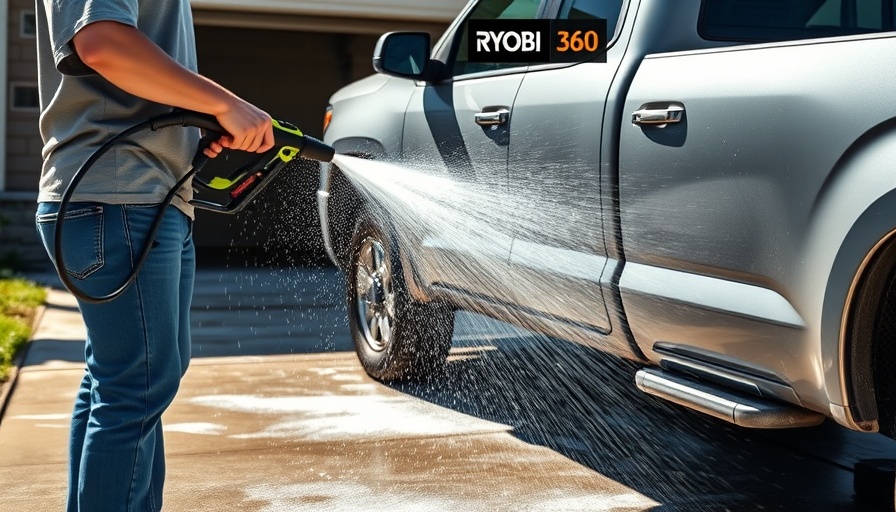
Ryobi High Flow Pressure Washer cleaning truck outdoors.

Unveiling the Ryobi High Flow Pressure Washer: Pros and Cons

If you're a homeowner who takes pride in maintaining a clean and tidy property, the new Ryobi Automotive High-Flow Pressure Washer might just be what you need. Designed especially for car enthusiasts and those who want to keep their outdoor spaces spotless, this model stands out with its tailored features. But before you rush to buy, it's important to weigh its pros and cons to see if it's the right fit for your cleaning needs.

Performance That Makes a Difference

One of the standout features of the Ryobi RY14AM12 model is its maximum pressure rating of 1200 PSI. This is ideal for outdoor tasks such as washing patio furniture or cleaning your vehicle without risking damage to its paintwork. Coupled with a flow rate of 1.8 GPM, significantly higher than many models in the market, it ensures effective cleaning without spending too much time redoing areas. Essentially, the increased flow rate allows you to cover more ground quickly, making this washer a powerful tool in your home maintenance arsenal.

Compact and Convenient Design

Weight is another area where the Ryobi RY14AM12 shines. At just 15 pounds, it's lightweight and easily portable. The design may forgo wheels, which could be seen as a downside by some, but its compactness means you can easily carry it around and set it up without hassle. Plus, the 40-foot high-pressure hose gives you the flexibility to reach all areas of your vehicle or yard without needing to keep moving the washer. This is particularly useful for suburban homeowners with large driveways or multiple vehicles.

Comparing the High Flow to Other Models

In the diverse lineup of Ryobi's pressure washers, it’s essential to understand how the High Flow RY14AM12 compares to others. Many other Ryobi models offer varying features mostly focused on power; however, they often lack the flow rate this specific model boasts. When looking at similar corded options, you’ll notice they tend to stick between 1.1 to 1.2 GPM, which can mean a longer cleaning process for tasks of similar scale. Knowing this difference can help you decide if speed and efficiency are your priorities.

Understanding Your Cleaning Needs

When considering a pressure washer, it's vital to understand your unique needs and what you'll be using it for. If you primarily wash your car and occasionally clean decks or patio furniture, the Ryobi Automotive High Flow model generally strikes a great balance of power and gentleness. However, if your projects often involve heavier-duty tasks, like blasting away greasy stains from a garage floor, you might be better served with a more powerful model despite the higher risk of damaging delicate surfaces.

Why Homeowners Should Consider Electric Models

Electric pressure washers, such as the High Flow model, are especially appealing to homeowners for several reasons: they are quieter than gas-powered units, require less maintenance, and are more environmentally friendly. With continuing trends toward sustainability in daily life, many are turning toward more eco-conscious options like electric tools that can still deliver the power needed for effective cleaning.

What Others Are Saying: Consumer Insights

Consumer reviews for the Ryobi Automotive High Flow Pressure Washer have been positive, with many users praising its ease of use and the effectiveness of its cleaning capabilities. Homeowners appreciate the ability to clean their vehicles efficiently without having to frequent commercial car washes, saving both time and money in the long run. However, as with any product, some consumers have noted areas where they believe improvements could be made, such as the absence of wheels.

Making the Decision: Is It the Right Fit for You?

Ultimately, determining whether or not the Ryobi High Flow Pressure Washer is right for you comes down to your specific needs and cleaning expectations. If your focus is on maintaining a clean outdoor environment while being mindful of preserving your vehicles’ aesthetics, this model is a solid contender. To truly appreciate the benefits it has to offer, consider your typical cleaning routine and weigh that against the features of this innovative washer.

As homeowners take on more DIY projects and look for adaptable equipment that makes outdoor maintenance efficient and eco-friendly, the Ryobi High Flow Pressure Washer arrives as a strong option. Whether tackling tough stains or simply refreshing your vehicle's surface, this model promises to deliver ease and performance for the contemporary homeowner.

Take Action! If you’re eager to enhance your home cleaning routine, consider exploring your options for the Ryobi High Flow Pressure Washer. With benefits that align perfectly with sustaining your home’s aesthetic and efficiency, it’s a tool worth investigating further.

Tool Tips

8 Views

0 Comments

Write A Comment

*
*
Related Posts All Posts
02.20.2026

Is the Metabo HPT 36V Reciprocating Saw the Best Choice for DIY Projects?

Update Unveiling the Metabo HPT 36V Reciprocating Saw: A Game-Changer for DIY Enthusiasts In the realm of home improvement tools, the Metabo HPT 36V Reciprocating Saw, known as the CR36DA, stands out for its impressive performance and innovative features. Homeowners and DIY enthusiasts looking to tackle renovation projects will find this tool both powerful and user-friendly, catering to various cutting needs. From demo work to precise cuts, the CR36DA is ready to be put to the test. Performance That Impresses The Metabo HPT CR36DA boasts a remarkable max stroke rate ranging from 1,700 to 3,000 strokes per minute (SPM). It’s equipped with a responsive brushless motor that provides an excellent cut on wood, metal, and composite materials. With a 1.25-inch stroke length and orbital action, this saw excels in faster cuts through wood, making it perfect for homeowners engaged in carpentry or remodeling tasks. Vibration Control for a Comfortable Experience One of the standout features of the CR36DA is its class-leading vibration control, thanks to the User Vibration Protection (UVP) technology integrated into its design. This means less strain on your arms and hands, making long cutting sessions far more manageable—a significant advantage when engaging in extensive renovations. Hybrid Power Options for Flexibility What really sets the CR36DA apart is its dual functionality. It offers the flexibility of being powered by either a 36V battery or a standard AC power adapter. This feature is particularly beneficial for homeowners engaged in ongoing projects who may frequently switch between battery use for mobility and corded use for extended power. The AC power adapter, available as an accessory, ensures that you'll never run out of juice during a job requiring extensive cutting. Tested and Tried: Real-Life Applications In head-to-head tests against rival models, the CR36DA has shown remarkable consistency. During trials where it tackled various materials, including PVC pipes, wood beams, and even cast iron, it consistently ranked near the top. For instance, when cutting through 2x12 lumber, it achieved a cutting time averaging 8.23 seconds, placing it in close competition with other premium saws. Considerations: What to Know Before You Buy While the Metabo HPT 36V Reciprocating Saw excels in many areas, potential buyers should be aware of some minor drawbacks. Notably, the tool has a slightly heavier build, weighing 10.76 lbs when equipped with the recommended battery—a consideration for those who prioritize lightweight tools. Additionally, the blade change mechanism requires a quarter twist to release, which may feel cumbersome compared to models featuring a more intuitive lever. Affordability Meets Quality The pricing for the Metabo HPT CR36DA is competitive, with the bare tool available for $199 and the kit, including a 4.0Ah battery, charger, and storage bag, retailing for $399. Given the reliable performance and dual power options offered, it presents an attractive choice for homeowners looking to invest in a robust tool. Conclusion: Is the Metabo HPT CR36DA Right for You? As homeowners embark on their DIY journeys, finding the right tools can significantly impact project success. The Metabo HPT 36V Reciprocating Saw CR36DA not only provides powerful cutting capabilities but also emphasizes user comfort and flexibility through its design. With its top-tier performance in various material applications, it’s certainly worth considering for your next home improvement project. Don't hesitate to take the plunge—investing in quality tools can transform how you approach renovations, making tasks not only effective but enjoyable.

02.19.2026

Cordless Impact Wrench versus Pneumatic: Which is Best for Your DIY Projects?

Update Your Guide to Choosing Between Cordless and Pneumatic Impact WrenchesWhen it comes to home improvement projects, particularly DIY automotive work, mechanics often face a crucial decision: should they opt for a cordless impact wrench or a pneumatic one? Knowing the differences between these tools can significantly enhance your efficiency and effectiveness when tackling various tasks. Here’s a comprehensive guide exploring both options, their features, and how to choose the right tool for your needs.The Advantages of Cordless Impact WrenchesCordless impact wrenches have gained immense popularity among DIY enthusiasts for their convenience and portability. You can easily maneuver these tools in tight spaces without the hassle of cables or hoses, making them ideal for quick jobs. This freedom of movement allows for a more straightforward workflow, especially if you’re working in various areas around your home or garage.Moreover, modern advancements mean that cordless impact wrenches now deliver impressive power comparable to their pneumatic counterparts. Many models come equipped with brushless motors that enhance performance and battery life, allowing for longer usage without hindering power output. Features such as overmolded grips also provide increased comfort, making them easier to handle during extended periods of use.Why Pneumatic Impact Wrenches Still Rule the RoostWhile cordless tools are all the rage, pneumatic impact wrenches stand out, particularly in industrial settings. They offer substantial torque and speed, making them suitable for heavy-duty tasks, such as automotive repair and professional machinery maintenance. Because they rely on compressed air, air impact wrenches deliver consistent power without the fluctuations in performance that can occur when battery levels drop.However, pneumatic wrenches come with their own set of challenges. You will need an air compressor to power these tools, which can restrict your mobility and add additional complexity to your workspace. Maintenance is also more demanding, as pneumatic tools require regular checks to ensure they function correctly, making them less user-friendly for the average homeowner.Considering Weight, Size, and FlexibilityWhen selecting the right impact wrench, weight and size can significantly affect your choice. While it was a common belief that pneumatic wrenches were lighter, advancements in cordless technology have created models that are not only lightweight but also compact. For instance, when comparing the Milwaukee M18 Fuel 2962 and the Ingersoll Rand 231HA, the Milwaukee model is demonstrably more compact, making it an appealing choice for homeowners tackling renovation projects or minor vehicle repairs.Powering Through: A Torque and Performance ShowdownPower and performance are crucial when deciding between the two types of impact wrenches. Pneumatic models typically boast higher torque — often exceeding 1,000 ft-lbs — making them suitable for continuous, heavy-duty work where numerous fastenings are involved. In contrast, the best cordless models now can achieve torque output levels approaching those of pneumatic wrenches, making them a solid choice for many users.Understanding your specific tasks will guide your choice. For quick fixes, tire changes, or projects that require a mix of mobility and power, a cordless model like the Milwaukee may suffice. Alternatively, if you have a larger scale automotive or construction project that demands significant torque over extended periods, the pneumatic option may be the best fit.Cost Considerations: Initial vs. Long-Term InvestmentCost is a major factor for most homeowners. Cordless impact wrenches generally come with lower upfront costs, but keep in mind that they may incur additional expenses over time due to battery replacements and maintenance. Pneumatic wrenches require a higher initial investment, especially when factoring in the needs of an air compressor, but the durability and sustained power can offer more long-term value.What to Consider Before Making Your SelectionYour decision largely depends on your specific needs. Ask yourself:Do you frequently work in tight spaces or require mobility?Is high torque essential for your tasks?Are you comfortable performing routine maintenance on your tools?What is your budget for both initial purchase and long-term upkeep?Taking time to reflect on each of these questions will lead you toward the impact wrench best suited for your future projects.Bringing it All Together: Making the Right Choice for Your ProjectsUltimately, whether you choose a cordless or pneumatic impact wrench involves weighing all of these factors against your unique needs and preferences. With thoughtful consideration and the knowledge of what each type offers, you can confidently select the tool that will empower your home improvement projects and make your DIY endeavors more enjoyable.

02.18.2026

Unlock Your DIY Potential with the Makita 40V Max XGT GAG11 Grinder

Update Unleashing Power and Precision: The Makita 40V Max XGT GAG11 For homeowners diving into DIY projects, choosing the right tools can make all the difference. The Makita 40V Max XGT GAG11 Angle Grinder has emerged as a front-runner, hailed for its superior performance and innovative features. A thorough examination reveals why this tool not only stands out in a crowded market but also earns its place in your toolkit. What Makes the Makita GAG11 Stand Out? At first glance, the GAG11 appears to be a standard angle grinder. However, it’s equipped with a brushless motor that offers the equivalent power of a 13-amp corded model. With speeds ranging from 3,000 to 8,500 RPM, this grinder is designed for a spectrum of applications—from light home renovations to tougher metalwork. One standout feature is its X-LOCK system, which enables tool-free wheel changes, making it remarkably efficient for the busy DIY enthusiast. Additionally, the Active Feedback-sensing Technology (AFT) enhances safety by automatically turning off the tool if a bind occurs, a crucial feature for those inexperienced with power tools. Safety Features That Count As fun as DIY can be, safety is paramount. The GAG11 takes this seriously; the tool’s electric brake stops rotation quickly, providing peace of mind during intense grinding sessions. For those tackling heavier projects, the wireless communication with dust extractors keeps the workspace clean, mitigating mess and potential health risks from debris inhalation. Ergonomics and Usability The weight of the GAG11 sits at a solid 7.8 pounds with the battery installed, which may feel hefty compared to competitors. However, the tool’s weight contributes to its stability during use, allowing for greater control while working. A notable downside is the lack of multiple side handle positions—something that could enhance comfort, especially for extended projects. However, the physical speed dial is a welcome feature, offering users the ability to tailor their grinding experience, which is particularly important in varied tasks. Pricing: An Investment in Quality Quality tools often come with a higher price tag, and the GAG11 is no exception. Priced at $319 for the bare tool, or $554 when purchased with a battery and charger, it positions itself as a premium option within the 5-inch grinder category. While it may stretch the budget, users often find that the durability and performance justify the cost. Inspiring Creativity: Real-Life Applications for the DIYer Imagine the potential projects you could tackle with the GAG11! From sharpening blades to crafting unique metal garden art, this tool empowers users to explore their creativity. One homeowner utilized a more traditional grinder for sculpture-making but soon switched to the GAG11 after experiencing issues with stalling during tougher cuts. With less downtime, the GAG11 helped her expand into larger projects that previously felt too daunting. Wrapping Up: Is This Grinder Right for You? If you’re a DIY enthusiast or a homeowner looking to amp up your renovation skills, the Makita 40V Max XGT GAG11 Anger Grinder deserves your consideration, despite its higher cost. With its unique features, solid safety protocols, and versatile power, this tool may just make your next home project easier and more enjoyable. Are you ready to enhance your toolkit? Investing in quality power tools like the GAG11 can truly unlock your potential in DIY renovations and repairs, giving you the confidence to tackle projects you've only dreamed about.

Terms of Service

Privacy Policy

Core Modal Title

Sorry, no results found

You Might Find These Articles Interesting

T
Please Check Your Email
We Will Be Following Up Shortly
*
*
*