Add Row
Add Element
cropper
update
Ultimate Home DIY
update
Add Element
  • Home
  • Categories
    • Home Hacks
    • Tool Tips
    • Green Living
    • Renovation
    • Fix It
    • Decor Dreams
    • Skill School
October 17.2025
3 Minutes Read

Explore Kreg's Latest 20V Power Tools: Ideal for Your DIY Projects

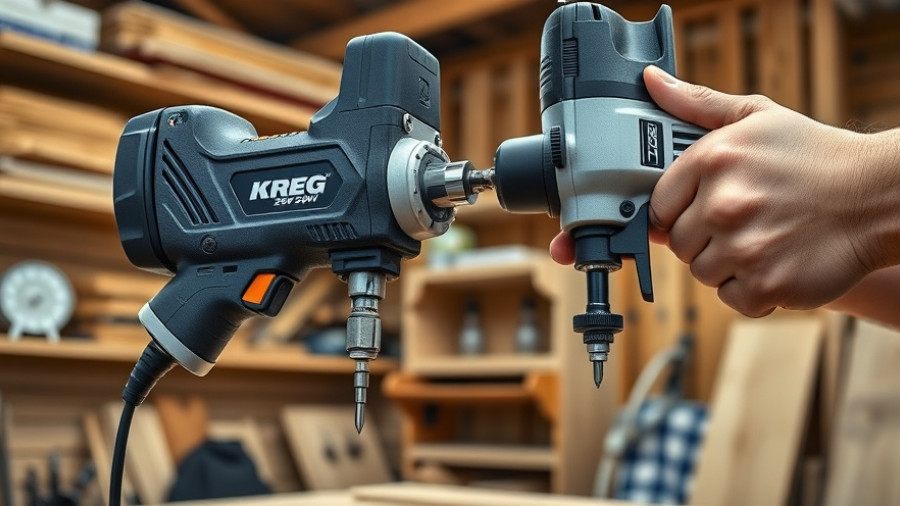
Hands using Kreg 20V power tools for woodworking precision.

Introducing Kreg’s Exciting 20V Power Tools: A Game Changer for DIY Enthusiasts

If you’re passionate about DIY projects or renovations, you’re probably familiar with Kreg’s reputation for producing innovative woodworking tools. With their recent launch of the Kreg 20V cordless power tools, this brand is taking a bold step into the world of battery-powered options tailored for woodworkers and home improvement aficionados alike.

What Sets Kreg 20V Tools Apart?

The hallmark of Kreg’s 20V lineup is their Blue Ion batteries designed specifically to optimize performance. These advanced lithium-ion batteries communicate seamlessly with the brushless motors to deliver enhanced runtimes, ensuring you can focus on your work without dealing with constant interruptions from dead batteries.

Alongside charging speed optimization and smart temperature management, these batteries are also designed for durability, which is crucial for any homeowner tackling various tasks.

Deep Dive into Kreg’s Standout Tools

The Kreg 20V Rebel Ionic Drive Pocket-Hole Joiner is a true testament to what Kreg does best: woodworking joinery. Imagine a tool that lets you create pocket holes with the push of a button! This pocket-holer allows for quick drilling into materials from 1/2-inch to 1 1/2 inches thick and comes equipped with accessories like a rail guide and a vacuum attachment, making it perfect for clean, precise cuts.

Compact Yet Powerful: The Ionic Drive Drill and Impact Driver

Next in the lineup is the Kreg 20V Ionic Drive Compact Drill, perfect for reaching into tight spaces. At just 5.9 inches, it’s designed to handle medium-duty projects, providing enough torque to drive screws without issue. Additionally, the Kreg 20V Ionic Drive Impact Driver offers an impressive balance of size and power, reaching up to 2200 in-lbs of torque while remaining compact at only 4.4 inches long.

Essential Tools for Every Project

Kreg’s lineup doesn’t stop there. With tools like the 6 1/2-inch Plunge-Cut Track Saw and the 1/4-inch Trim Router joining the mix, the versatility offered by these cordless tools is unmatched. Whether you need precision cuts for trim work or smooth, straight cuts for larger panels, Kreg's selection ensures you have the right tools at your disposal.

The Value Proposition for DIYers

What truly enhances the Kreg 20V lineup is its focus on the needs of woodworkers and DIYers. Each tool is designed with user-friendliness in mind, offering easy handling and straightforward features that allow everyone from beginners to seasoned pros to tackle their projects confidently. For homeowners interested in renovations, having these efficient tools at your side can mean the difference between a daunting task and a rewarding creative experience.

Final Thoughts: Embrace the Change

As Kreg steps into the battery-powered realm, they are introducing tools that not only cater to the woodworking community but also offer valuable resources for anyone looking to improve their home. The new tools, combined with Kreg’s existing reputation, present a unique opportunity for DIY enthusiasts to enhance their toolkit.

Are you ready to take on your next home project with confidence? Investing in Kreg’s 20V power tools could provide the boost you need to make your DIY dreams a reality!

Explore the collection today and discover how Kreg's power tools can elevate your home improvement projects.

Tool Tips

25 Views

0 Comments

Write A Comment

*
*
Related Posts All Posts
01.20.2026

What Was the Most Popular Tool in the Year You Were Born? Find Out!

Update Discover Your Tool History: The Most Popular Tool Since Your Birth Year Have you ever wondered what the most popular tool was in the year you were born? As homeowners and DIY enthusiasts, we often take for granted the incredible evolution of tools available to us today. From power drills to smart saws, tools have significantly transformed over the decades, making them more effective and easy to use. Let’s take a fun journey through the decades, highlighting some of the most significant tools and their impacts on home improvement and construction. The Glory of the 1960s: The Birth of Cordless Innovation The 1960s marked a pivotal time for the tool industry. Black & Decker introduced the world’s first cordless drill in 1961, revolutionizing the way we approach DIY projects. Thanks to this innovation, homeowners could now tackle tasks without being tethered to a power outlet, allowing for greater ease of movement and flexibility. Plus, this advancement paved the way for future cordless tools, making home improvement projects more accessible and efficient. 1970s to 1980s: The Era of Precision and Safety The journey of tool history didn’t stop there. The 1970s and 1980s led to further innovations, such as the introduction of the Stanley PowerLock tape measure in 1963, which became critical in ensuring precise measurements—an essential for any renovation project. In 1980, the ratchet/socket wrench emerged, simplifying tasks that previously required considerable time and effort. This tool is still widely used today, showcasing the enduring nature of its design. New Millennia Innovations: Smart Tools for a Smart Home As technology progressed into the 2000s, tools became smarter. With the rise of battery-powered tools, innovations such as lithium-ion batteries became dominant in powering household devices, leading to improvements in battery life and performance. The introduction of intuitive designs and user-friendliness ensured that these tools catered not only to seasoned pros but also to beginners. Future Trends in Tools: Sustainability and Smart Technology Looking forward, the future of tools lies in sustainability and smart technology. As people are more environmentally conscious, companies are focusing on developing tools with less carbon footprint and higher energy efficiency. Innovations like self-healing batteries for tools not only aim to reduce environmental impact but also promise longevity in performance. Why Your Tool's History Matters Understanding the evolution of tools fosters a greater appreciation for your home projects. The tools you use are not just implements; they are the result of decades of innovation, trial, and error. Each tool carries a piece of history that has shaped what is possible in home renovations and DIY culture today. Knowing what was popular during your birth year can connect you more deeply to your tools. Conclusion: Dive into Your Birth Year Tool History So, what was the most popular tool in the year you were born? Whether it’s a well-designed power drill or a classic tape measure, each tool has its role in shaping modern home improvement. We encourage homeowners and DIY enthusiasts alike to reflect upon their own journeys with tools, celebrating both the innovations of the past and the exciting possibilities of the future. If you are eager to continue your journey in DIY projects, why not explore the tools from the list that correspond to your birth year? Find out what makes them special and how they can inspire your next home improvement adventure!

01.19.2026

How Self-Healing Batteries Will Transform Your Tools and EVs

Update Revolutionizing Battery Technology: The Future of Self-Healing Imagine never having to replace the batteries of your power tools or electric vehicle (EV) again. The concept of self-healing batteries, often regarded as science fiction, is inching closer to reality as researchers focus on technology that can withstand the rigors of daily use. By tackling the underlying issues that cause battery degradation, these innovations could signal a new era for both DIY enthusiasts and environmentally conscious consumers. Understanding Battery Failures: Why Do Tools and EVs Struggle? Typically, power tool batteries and EVs don’t just fail overnight. The degradation is a gradual process resulting from constant use. As batteries experience repeated charge cycles, their internal components face mechanical stress—electrodes crack, connections falter, and performance dips. For homeowners investing their time and money in DIY projects or renovations, understanding these failure modes is essential. The shift to self-healing technologies could mean a reliable battery performance that lasts longer under the most demanding conditions. A Closer Look at Self-Healing Systems The beauty of self-healing batteries lies in their potential to mend themselves. Current research, including a collaborative project in the EU named PHOENIX, aims to create batteries equipped with advanced sensors that can detect damage and trigger repair mechanisms autonomously. This technology seeks to enhance durability, safety, and eco-friendliness—an essential aspect for those looking to minimize their carbon footprint. Innovative Components: From Electrodes to Electrolytes One promising avenue involves self-healing electrodes that could maintain connectivity, even when internal damage occurs. Researchers are exploring flexible materials capable of reconnecting when cracked, addressing one of the most significant challenges within lithium-ion technology. For homeowners engaged in heavy-duty tasks, this means tools can deliver consistent power without the constant worry of battery failure. Solid-State Batteries: A Game-Changer for the Industry In addition to self-healing attributes, solid-state batteries represent a major leap forward. Unlike conventional batteries that depend on liquid electrolytes, solid-state versions utilize solid materials, enhancing safety and energy density. A study from Chinese scientists revealed a self-healing layer within solid-state batteries that could effectively address the issues of separation and inefficiency that typically plague older models. For EV users, this means longer driving ranges and the possibility of fewer charging stops. Predictions for the Future: What Lies Ahead? As research continues to advance, we can expect self-healing batteries to become a mainstay not just in power tools, but across various devices, from smartphones to electric vehicles. The potential applications are boundless, enabling consumers to maintain a sustainable lifestyle while enjoying reliable technology. If successful, these innovations could reduce the need for new raw materials, cutting back on waste and encouraging a greener future. Practical Insights for Homeowners: Embracing the Change For homeowners, the emergence of self-healing batteries represents a significant opportunity to simplify home improvement projects. Imagine not needing to worry about battery replacements during a critical renovation or DIY task. By investing in future technologies equipped with self-healing capabilities, homeowners can save both time and resources, enhancing their overall experience. How can you harness these innovations? Stay informed, look for products incorporating self-healing technology, and consider the long-term benefits of sustainable materials. The Emotional Appeal: Technology You Can Trust Ultimately, self-healing battery technology inspires confidence in users. With the forecast for safer, more reliable power tools and electric vehicles, homeowners no longer have to settle for short-lived battery performance that often leads to frustration. Instead, they can embrace a future that combines convenience and sustainability. To stay ahead in your home renovation journey and make informed choices about the tools you use, keep an eye on the emerging trends in battery technology that promise lasting impact and incredible possibilities.

01.18.2026

Master Clamshell Packaging: 6 Clever Ways to Open Without Curse Words

Update Breaking Free from Clamshell Pack Anxiety For many homeowners, clamshell packaging might as well be a torture device. Those robust, rigid plastic encasings serve their purpose in protecting products and preventing theft. But once you get home, getting into them without resorting to language that would make a sailor blush is the real challenge. As we delve into effective and curse-free methods for opening these packages, we aim to not only simplify the task but to also reclaim your sanity. Method 1: The Surprising Can Opener Trick It sounds simple, yet the can opener method is a game-changer for tackling clamshell packaging. Many consumers have been pleasantly surprised by how effective this age-old tool can be when applied to plastic. By clamping down on one of the long sides of the blister pack, you can expertly cut through it just as you would with food cans. A tip for navigating multiple sides: start on the open edge and proceed to the closed corners to ensure a smooth opening. Method 2: Cordless Multi-Cutters – Your New Best Friend For those who embrace modernity in their toolkits, cordless multi-cutters can make light work of tough clamshells. Imagine the efficiency of a self-spinning blade, designed to bite right into packaging. Although initiation may require a bit of finesse, this tool offers the advantage of speed and ease once you get past that first tough cut. Rethinking Utility: The Benefits of Tradesman Shears Tradesman shears, or heavy-duty scissors, fill a vital niche in opening clamshell packaging. Unlike standard kitchen scissors, these are engineered to cut through tough materials without bending or breaking. Starting from the top makes for an easy flap to open the package. As a bonus, these shears don’t have to be limited to just clamshells; their utility in various other household projects makes them a worthy investment. Safety First: The Importance of Proper Technique Regardless of the method you choose, safety is fundamentally important. Clamshell packaging often results in sharp edges and potential hazards if not handled carefully. Be mindful of how you position your hands during the cutting phase to avoid accidental slices. Additionally, remember to stow away any sharp objects immediately after use to prevent accidents, especially in homes with children. Community Advice: Share Your Clamshell Horror Stories Have you ever experienced frustrating struggles with clamshell packaging? Sharing tips or anecdotes can not only enrich the conversation but could also provide solace for those who have faced similar challenges. Every little piece of advice can make a substantial difference, creating a community approach to managing this persistent annoyance. Echoes of History: Why Was Clamshell Packaging Invented? Understanding the origins of clamshell packaging sheds light on its design. Originally, these packages were created to protect products while minimizing shoplifting—a beneficial endeavor for retailers. However, they inadvertently evolved into a design that seems hell-bent on frustrating consumers. By recognizing their purpose, we gain insight into the importance of pushing for better, more user-friendly packaging designs in the industry. Investing in Your Toolkit: The Value of Good Tools For the avid DIYer or homeowner, investing in quality tools is more critical than ever. Tools like tradesman shears or cordless multi-cutters don’t just assist with clamshells; they open doors to a world of home improvement possibilities. A solid toolkit can empower you to tackle a range of home projects with confidence and ease, turning challenges into opportunities for creativity and innovation. Are you ready to take control of your packaging woes? Explore these methods and invest in the right tools to enhance your home improvement adventures. Your sanity—and your fingers—will thank you!

Terms of Service

Privacy Policy

Core Modal Title

Sorry, no results found

You Might Find These Articles Interesting

T
Please Check Your Email
We Will Be Following Up Shortly
*
*
*